Automotive Mounting Clips Engineering Standards & Selection Guide

Blog | Blog | Jan 15,2026

In automotive electrical systems, mounting clips are often viewed as simple fastening accessories. However, in reality, they go beyond simply securing cables; they help maintain wiring stability, reduce vibration-induced displacement, and protect signal integrity throughout the vehicle’s lifespan.

As vehicle architectures become increasingly complex, wiring harness systems carry higher currents, denser signal paths, and more critical functions. This shift is particularly evident in electric vehicles, where high-voltage cables require robust wiring, good electrical insulation, and the ability to withstand the heat generated by power electronics.

LHE fully considered these evolving needs when developing its mounting clips. Through material control, precision mold manufacturing, and automotive-centric validation, LHE is committed to addressing the challenges of modern wiring harness securing across multiple vehicle platforms.

The Types of Automotive Mounting Clips

Automotive mounting clips can be categorized by their function and installation method. Each type is designed to solve a specific routing or assembly challenge.

Fir Tree and Wing Mount Clips

Fir tree and wing mount clips are commonly used in applications that require insertion into pre-drilled holes. Their multi-barb structures generate strong retention forces once installed, allowing them to resist pull-out under vibration and thermal cycling.

These clips are frequently used in chassis wiring and underbody routing, where consistent extraction force helps keep harnesses in position despite road-induced movement.

automotive electrical systems
Fir Tree and Wing Mount Clips

Edge Clips

Edge clips attach directly to metal or plastic panel edges without the need for drilling. This makes them suitable for areas where hole creation is restricted or where structural integrity must be preserved.

They are often used along body panels, frames, and interior metal edges. Integrated cable holders or channels allow wire bundles to be guided while minimizing contact with sharp surfaces.

Adhesive-Backed Clips

Adhesive-backed clips are designed for smooth surfaces where mechanical fastening is not feasible. They are commonly used in interior applications or low-load zones.

Performance depends heavily on adhesive selection, surface preparation, and temperature exposure. For automotive use, these clips are typically limited to non-structural routing where vibration levels are moderate.

Adhesive Backed Clips
P-Clips and Omega Clips

P-Clips and Omega Clips

P-clips and Omega clips are designed to secure larger cables, hoses, or fluid lines. Their circular profiles distribute clamping force evenly, reducing localized stress on insulation layers.

In automotive environments, these clips are widely used for fuel lines, brake lines, and high-current cables that require controlled spacing and consistent support.

Materials and Performance Specifications

Material selection is a defining factor in mounting clip performance, particularly in automotive environments with wide temperature swings and chemical exposure.

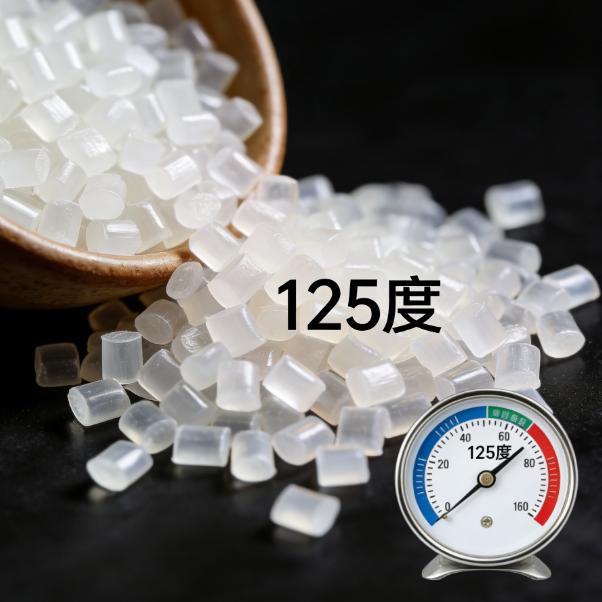
High-performance polymers such as PA66, PA46, and heat-stabilized nylon compounds are commonly used due to their mechanical strength and thermal resistance. These materials maintain dimensional stability across temperature ranges from approximately −40°C to +125°C, which covers most vehicle operating conditions.

Mechanical performance is often described through a balance between insertion force and extraction force. A clip must be easy to install on the assembly line while maintaining sufficient retention strength once in place. In high-vibration environments, inadequate extraction force can allow micro-movement, leading to harness wear or noise.

Environmental resistance is equally critical. Clips used in exterior or underbody applications must withstand UV exposure, moisture, and road contaminants. In engine compartments, resistance to oils, fuels, and cleaning agents helps prevent material degradation over time.

Materials and Performance Specifications

Design Standards in the Automotive Industry

Automotive mounting clips are developed under strict design and validation frameworks to ensure consistency and reliability.

USCAR-related testing protocols are commonly referenced for evaluating retention force, temperature cycling, vibration resistance, and environmental durability. While not all clips are directly certified, alignment with these standards supports OEM and Tier 1 approval processes.

Fool-proofing features are increasingly integrated into clip design. Color coding, asymmetric geometries, and orientation-specific locking features help reduce assembly errors on high-speed production lines. These design elements contribute to consistent installation without relying solely on operator training.

Lightweighting is another driving factor. Replacing metal brackets with engineered polymer clips reduces overall vehicle mass, which is particularly relevant for electric vehicles where weight efficiency directly affects driving range.

Design Standards in the Automotive Industry

The Applications of Automotive Mounting Clips

Chassis Wiring

Chassis Wiring

Chassis-level wire harnesses are exposed to water, debris, and constant mechanical stress. Mounting clips used in these areas are designed with abrasion resistance and sealing considerations. Drainage paths and clip geometry help prevent moisture accumulation around cables.

Dashboard and Interior Systems

Inside the cabin, mounting clips serve a different purpose. In addition to routing wires, they help control noise, vibration, and harshness (NVH). Clips with integrated damping features or flexible retention arms reduce rattling caused by vehicle movement.

These applications also require careful consideration of visual appearance and ease of assembly, as interior components are often installed later in the production process.

Powertrain Applications

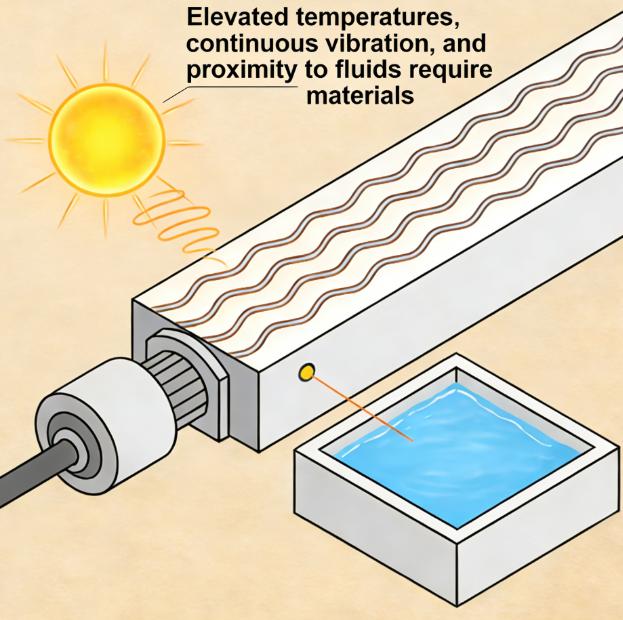
Powertrain environments place the highest demands on mounting clips. Elevated temperatures, continuous vibration, and proximity to fluids require materials that maintain strength and elasticity over long periods.

In electric vehicles, high-voltage cable routing introduces additional requirements related to insulation spacing and electromagnetic stability. Clips must support cable positioning without compressing insulation layers.

Powertrain Applications

Failure Analysis of Automotive Mounting Clips

Ensuring the lifespan of automotive fastening systems requires a deep understanding of potential failure factors. Most fastener problems can be traced back to thermal degradation, mechanical stress, or fatigue caused by vibration.

Thermal Embrittlement and Material Selection

Standard polymers often experience molecular chain breakage when continuously exposed to the high temperatures of the engine compartment, leading to embrittlement and catastrophic fracture.

Cause: Continuous operating temperatures exceeding the glass transition temperature of standard plastics.

Solution: Use high-performance, thermally stable materials such as PA66-HS or PA46. These materials are specially designed to maintain impact strength and flexibility at constant temperatures up to +125°C or +150°C.

Handling Stress and Precision Molding

Structural failures occurring during assembly are often due to localized stress concentrations.

Cause: Excessive insertion force (IF) requirements due to poor tolerance control or non-ergonomic clip geometry.

Solution: Employ precision injection moulding processes with tolerances controlled to ±0.05 mm to ensure uniform load distribution. Optimised geometry reduces initial drag, minimizing the risk of microcracks during high-speed automated assembly.
Handling Stress and Precision Molding

Dynamic Fatigue and Stability Maintenance

In the high-vibration automotive environment, creep and fretting wear can damage the locking mechanism of the snap-fit over time.

Causes: Insufficient pull-out force (EF) design or loss of material elasticity leads to minute displacements, resulting in wear on the locking interface.

Solutions: Strategically use reinforcing ribs and adjust material elasticity. By maintaining a high pull-out force/insertion force ratio (EF/IF), the snap-fit ensures the harness is securely held, even under continuous harmonic vibrations.

Conclusion

In automotive manufacturing, small components can have system-level consequences. A single mounting clip failure can result in harness damage, electrical faults, or costly service actions.

LHE designs automotive mounting clips with a focus on real-world operating conditions. By combining material expertise, controlled manufacturing processes, and application-driven design, LHE supports stable wire harness routing across chassis, interior, and powertrain systems.

From high-voltage EV platforms to conventional vehicle architectures, LHE provides fastening solutions that align with current automotive production requirements and evolving mobility technologies.

--- END ---

+86 18312905613