


While the engine, transmission, and braking system receive more attention during car maintenance, automotive wiring harnesses are crucial for ensuring the smooth and safe operation of a vehicle. Next, we’ll explore the importance of automotive wiring harness connectors in automobiles, the different types of automotive wiring harness connectors, and how to diagnose and prevent malfunctions.
Automotive Electrical Connectors: Identification, Selection, and Replacement
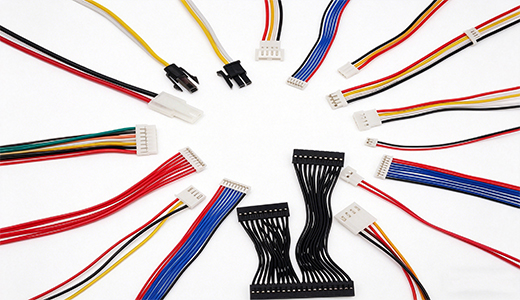
What Are Automotive Electrical Connectors?
Automotive electrical connectors are components designed to join wires and circuits within a vehicle, enabling the transfer of electrical power and data signals.
They typically consist of three main parts:
Housing: the outer shell that protects internal components
Terminals or pins: conductive elements that carry current
Seals or locks: features that protect against moisture, vibration, or disconnection
These connectors act as the “communication points” of a vehicle, linking systems such as sensors, lighting, and control modules.
Without reliable connectors, even a well-designed electrical system can fail to function properly.
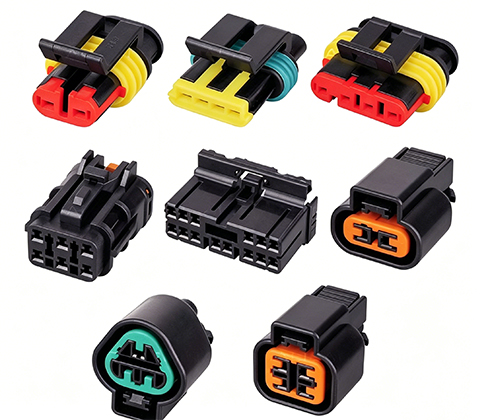
Automotive Wire Connector Types
Electrical wire connectors for cars are integral to a vehicle’s internal and external system, ensuring that power and signals are efficiently distributed across various components.
These connectors are categorised into four main types:
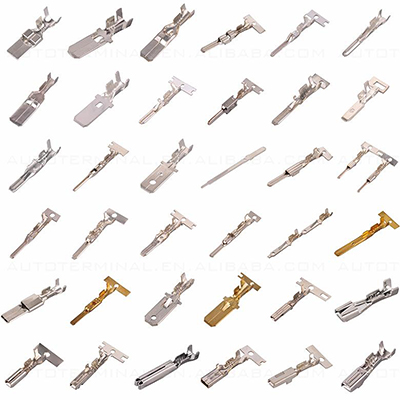
Terminals: Used to connect wires directly to a printed circuit board (PCB) without soldering, crucial for stable connections in control units and electronic modules.
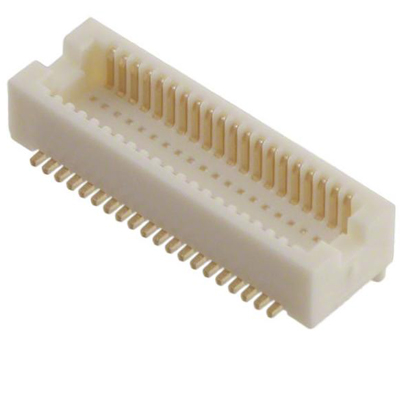
Board-to-Board Connectors: Used for linking two or more PCBs together, essential for the communication and power transfer between complex electronic systems like multimedia and Advanced Driver Assistance Systems (ADAS).
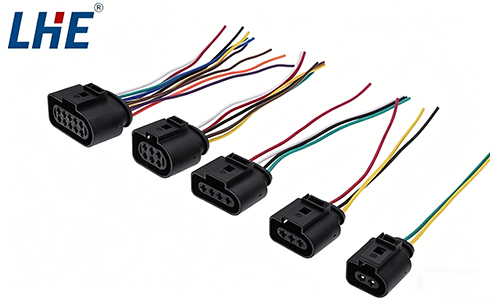
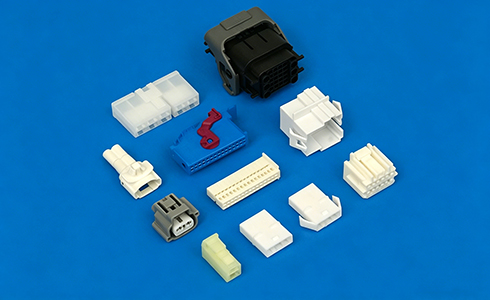
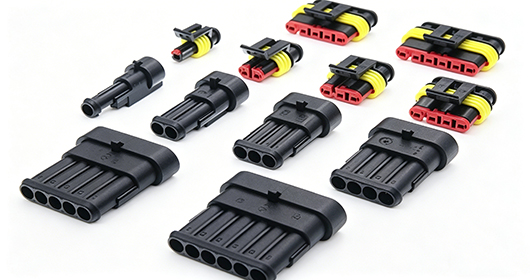
Wire-to-Wire Connectors: For joining individual wires or cables, allowing for the extension or modification of electrical circuits, used in repairs and installations.
General Automotive Connectors: Versatile and used for power and battery applications, including power distribution and auxiliary outlets for accessories.
Terminals
Terminals play a key role in maintaining secure and stable electrical connections within a vehicle, especially at high-demand points such as the battery and grounding systems.
They create a reliable link between the power source and the vehicle’s electrical network, supporting efficient energy transfer and helping preserve overall circuit stability.
Board-to-Board Connectors
Board-to-Board (BTB) connectors are designed to link printed circuit boards (PCBs) within modern automotive electronic systems. These connectors provide a stable pathway for both signal and power transmission, allowing different electronic modules to communicate effectively.
Their compact structure and precise alignment support the increasing complexity of in-vehicle electronics.
Wire-to-Wire Connectors
Wire-to-wire connectors are widely used in vehicle maintenance and repair, allowing two terminated wires to be joined securely. They are especially useful for restoring damaged circuits or modifying wiring layouts.
For example, butt connectors can be used to reconnect broken wires, while other types of wire-to-wire connectors support splicing and extending existing wiring. These solutions help maintain continuity in the electrical system and support flexible repair applications.
Automotive Seals & Cavity Plugs
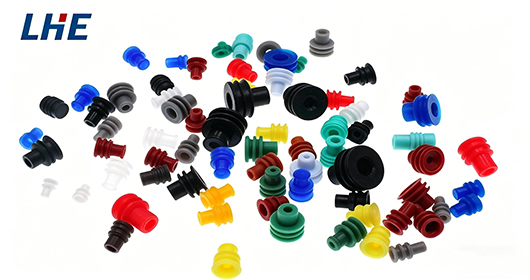
Automotive seals and cavity plugs are designed to protect connector systems from moisture, dust, and other environmental factors.
By sealing unused connector cavities and reinforcing active connections, they help maintain electrical stability and reduce the risk of corrosion or contamination.
These components support long-term reliability, especially in demanding automotive environments.
Automotive Connector Caps & Covers
Automotive connector caps and covers provide an added layer of protection for exposed or inactive connectors. They help shield critical connection points from physical damage, debris, and environmental exposure.
With precise molding and secure fit, these components contribute to maintaining connector integrity and ensuring consistent performance across vehicle systems.
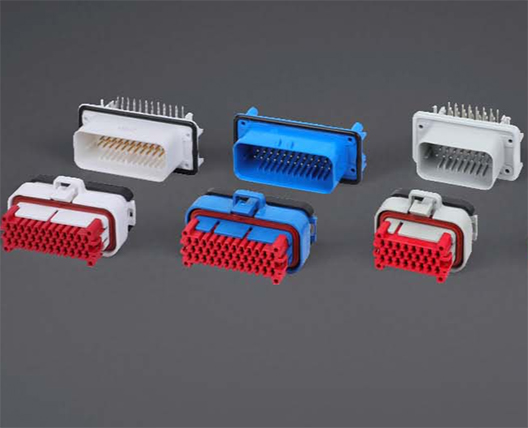
How to Identify Automotive Electrical Connectors?
Correct identification is the first step when replacing or sourcing a connector. Unlike generic hardware, automotive connectors must match precise specifications.
1. Pin Count
The number of pins or terminals inside the connector determines how many circuits it supports. Common configurations include 2-pin, 4-pin, and multi-pin connectors.
2. Connector Gender
Connectors come in male and female forms:
- Male connectors have exposed pins
- Female connectors contain sockets that receive the pins
Matching the correct gender is necessary for proper connection.
3. Shape and Keying
Connector housings are often uniquely shaped to prevent incorrect installation. This design ensures that connectors only fit their intended counterparts.
4. Application and Location
Different parts of a vehicle require different connector types. For example:
- Engine bay connectors must withstand heat and vibration
- Interior connectors focus on compact size and ease of assembly
- Exterior connectors require protection against moisture
5. Voltage and Current Rating
Most automotive systems operate at 12V, but connectors must still be rated appropriately for current load to avoid overheating or failure.
Signs of a Faulty Automotive Wire Connector
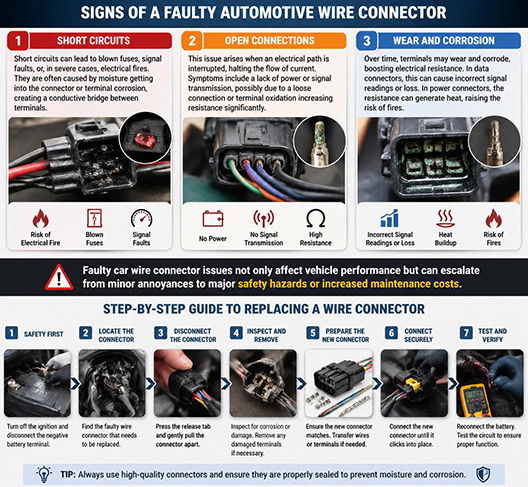
Short Circuits:
Short circuits can lead to blown fuses, signal faults, or, in severe cases, electrical fires. They are often caused by moisture getting into the connector or terminal corrosion, creating a conductive bridge between terminals.
Open Connections:
This issue arises when an electrical path is interrupted, halting the flow of current. Symptoms include a lack of power or signal transmission, possibly due to a loose connection or terminal oxidation increasing resistance significantly.
Wear and Corrosion:
Over time, terminals may wear and corrode, boosting electrical resistance. In data connectors, this can cause incorrect signal readings or loss. In power connectors, the resistance can generate heat, raising the risk of fires.
Faulty car wire connector issues not only affect vehicle performance but can escalate from minor annoyances to major safety hazards or increased maintenance costs.
Step-by-Step Guide to Replacing Automotive Connectors
Replacing an automotive connector requires precision and careful handling to ensure a stable and long-lasting electrical connection.
Step 1: Preparation
- Disconnect the vehicle battery to ensure safety
- Identify the correct replacement connector for your application
- Prepare the necessary tools, such as a wire stripper and crimping tool
Step 2: Remove the Old Connector
- Carefully cut or release the damaged connector
- Inspect the exposed wires for signs of corrosion, wear, or damage
Step 3: Prepare the Wires
- Strip the insulation gently, exposing a small section of the conductor
- Avoid nicking or weakening the wire strands during this process
Step 4: Attach the Terminals
- Insert the stripped wire into the terminal
- Use a suitable crimping tool to secure the connection firmly
Step 5: Install the Connector Housing
- Insert the terminals into the connector housing in the correct orientation
- Ensure each terminal locks into place securely
Step 6: Final Inspection
- Perform a light pull test to confirm the connection is secure
- Reconnect the battery and verify proper system operation
Proper installation is key to maintaining electrical performance. Even well-designed connectors rely on correct assembly to function as intended.
Long-Term Performance Maintenance Tips
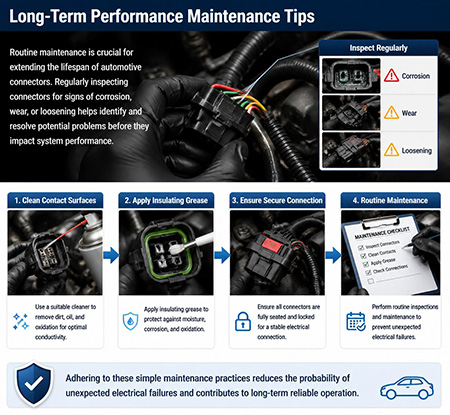
Routine maintenance is crucial for extending the lifespan of automotive connectors. Regularly inspecting connectors for signs of corrosion, wear, or loosening helps identify and resolve potential problems before they impact system performance.
Cleaning the contact surfaces with a suitable cleaner helps maintain good conductivity, while applying insulating grease provides additional protection against moisture and oxidation. Ensuring all connectors are securely connected also helps maintain a stable electrical connection. Adhering to these simple maintenance practices reduces the probability of unexpected electrical failures and contributes to long-term reliable operation.
Common Mistakes to Avoid
When working with automotive connectors, certain errors can lead to long-term issues:
- Using connectors with incorrect ratings
- Mixing incompatible connector types
- Poor crimping or loose connections
- Ignoring environmental requirements
- Skipping proper sealing in exposed areas
Avoiding these mistakes improves system reliability and reduces the risk of electrical failure.
Why Choose LHE Terminal?
For companies like LHE Terminal, connector design and manufacturing focus on meeting the demands of modern automotive systems.
Reliable connectors should provide:
- Consistent electrical performance
- Strong resistance to environmental stress
- Secure locking and sealing mechanisms
- Compatibility with a wide range of automotive applications
As vehicle technology evolves, connector solutions continue to adapt to new requirements, including higher data transmission and electrification.
--- END ---
LATEST NEWS


Copyright © Zhejiang Lianhe Import & Export Co., Ltd.. All Rights Reserved


