


Applications
Q What are the appropriate applications for DT connectors?
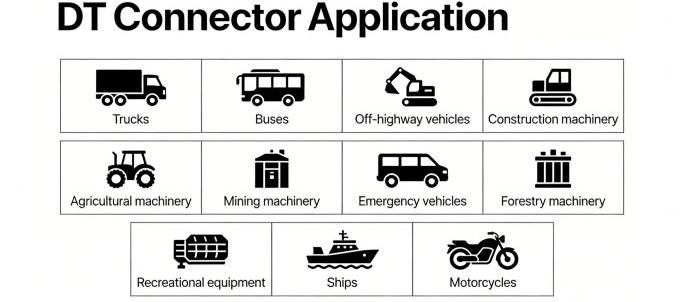
A: Truck, Bus, Off-highway, Construction, Agriculture, Mining, Emergency Vehicles, Forestry, Recreational, Marine, Motorcycle
Q Can DT connectors be used for both power and signal connections?
A: Yes. DT connectors can handle both power and signal circuits. Proper pin selection and wiring layout should be used to match the electrical requirements of the application.
Q When should I use DT connectors?
A: DEUTSCH DT connectors provide reliability and performance on the engine or transmission, under the hood, on motor controllers, solenoid interfaces, on the chassis, or in the cab. DT connectors offer field proven reliability and rugged quality.
The DT design strengths include optional flange mounting, multi-pin arrangements, lower costs, and design flexibility. DT connectors offer the designer the ability to use multiple size 16 contacts, each with 13 amp continuous capacity, within a single shell.
Key Features
Q What is a DT connector?
A: DT connectors are rugged electrical connectors designed for reliable power and signal transmission in harsh environments. They are commonly used in automotive, agricultural, construction, industrial, and off-road applications where resistance to moisture, dust, and vibration is required.
Q What does “DT” stand for?
A: DT originally refers to the Deutsch connector design standard. Over time, DT-style connectors have become widely adopted across the industry due to their durability and consistent performance.
Q What current ratings do DT connectors support?
A: Current capacity varies based on connector size, terminal design, and wire gauge. Many DT connectors are suitable for moderate-current applications commonly found in vehicle and equipment wiring systems.
Q What wire sizes are compatible with DT connectors?
A: DT connectors typically support common automotive and industrial wire gauges, such as 12 AWG, 14 AWG, and 16 AWG. Compatibility depends on the terminal type and housing configuration.
Q Are DT connectors waterproof?
A: DT connectors are designed with sealing systems that help prevent water and dust ingress. When properly assembled with compatible seals and terminals, they are suitable for outdoor and wet-environment applications.
Q What are the DT connectors’ key features?
A: DT Connector Key Features:
- Accepts contact size 16 (13 amps)
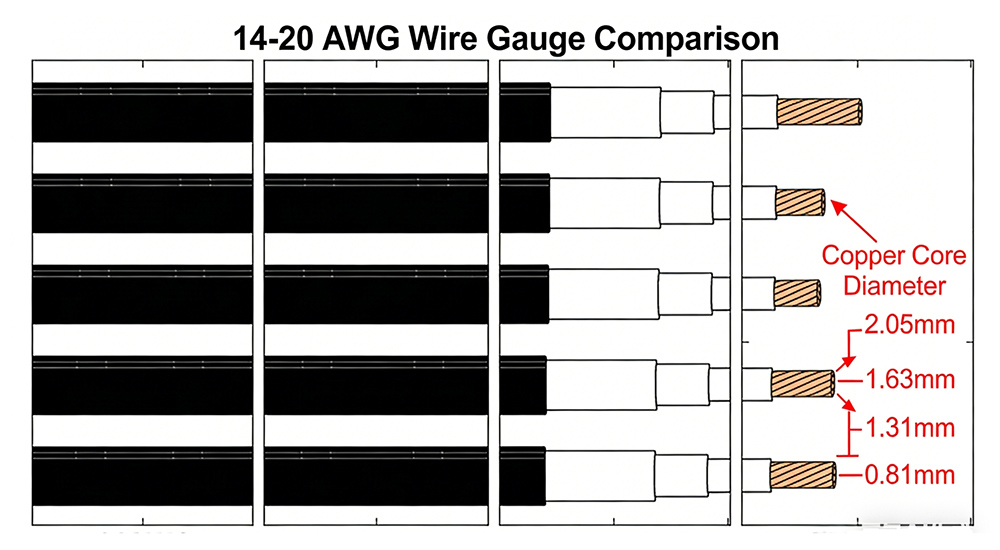
- 14-20 AWG
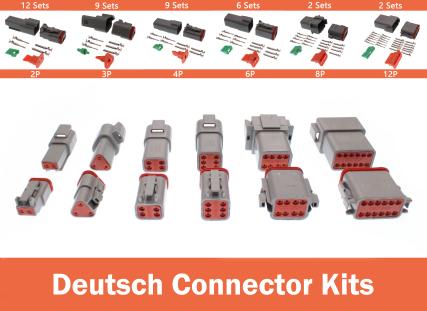
- 2, 3, 4, 6, 8, and 12 cavity arrangements
- In-line, flange, or PCB mount
- Rectangular, thermoplastic housing
- Integrated latch for mating
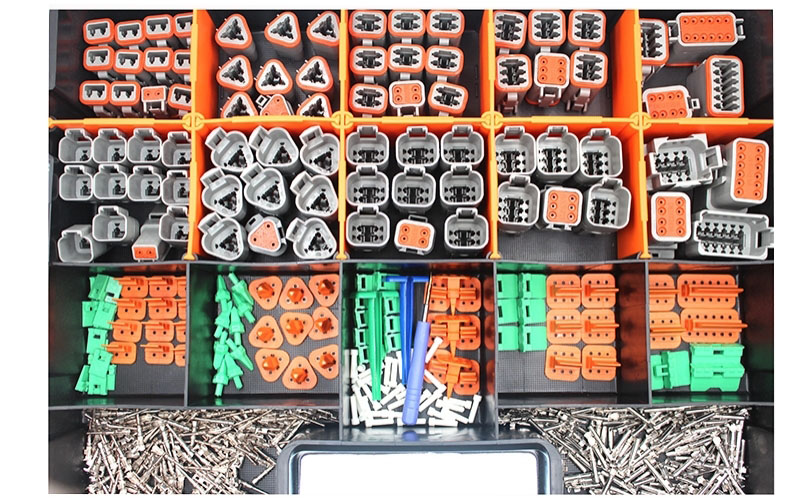
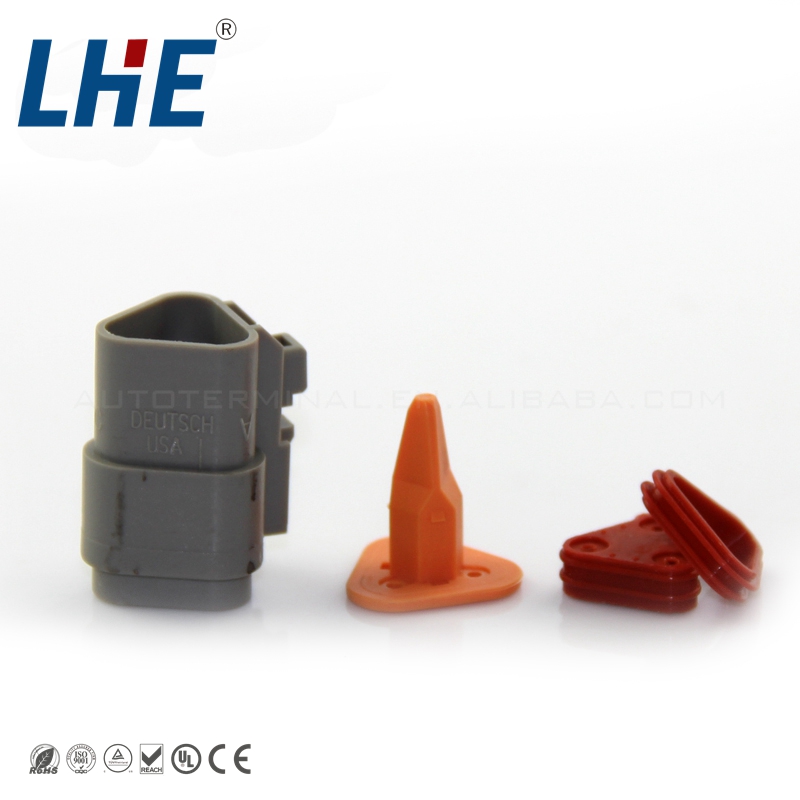
- Wedgelocks assure contact alignment and retention
Performance/ Specifications
Q What is the operating temperature range for DT connectors?
A: DT connectors are designed to operate reliably in temperatures ranging from -55°C to +125°C, making them suitable for both cold-start and high-heat environments.
Q Can DT connectors be repaired or reused?
A: Yes. DT connectors are serviceable. Damaged terminals can be removed and replaced using the proper extraction tool. Seals and terminals should be replaced if they show signs of wear.
Q How durable are DT connectors?
A: DT connectors are tested for repeated use and maintain mechanical and electrical integrity after multiple mating and unmating cycles under standard testing conditions.
Q What insulation resistance do DT connectors provide?
A: DT connectors offer a minimum insulation resistance of 1000 megohms at 25°C, supporting stable electrical isolation between circuits.
Q What level of water protection do DT connectors provide?
A: When properly assembled and mated, DT connectors meet IP68 requirements, indicating protection against dust ingress and prolonged water immersion under specified conditions.
Q How do DT connectors perform under vibration?
A: DT connectors are designed to remain locked and fully engaged under vibration exposure. Testing includes sinusoidal vibration across a wide frequency range, with no mechanical damage or unintended electrical interruptions beyond accepted limits.
Q What is the dielectric withstand capability of DT connectors?
A: DT connectors are designed to withstand high voltage testing with controlled current leakage, supporting electrical safety in demanding systems.

Q Are DT connectors resistant to industrial fluids?
A: DT connectors demonstrate resistance to many fluids commonly found in industrial and vehicle environments, including oils, fuels, and cleaning agents, without degradation of performance.
Q How moisture resistant are DT connectors?
A: Properly terminated and fully mated DT connectors can withstand temporary submersion without compromising electrical continuity or sealing integrity.
Q How do DT connectors handle thermal cycling?
A: DT connectors are tested through repeated temperature cycling between low and high extremes, maintaining structural integrity without cracking, leakage, or material failure.
Materials
Q What materials are used for DT connector housings?
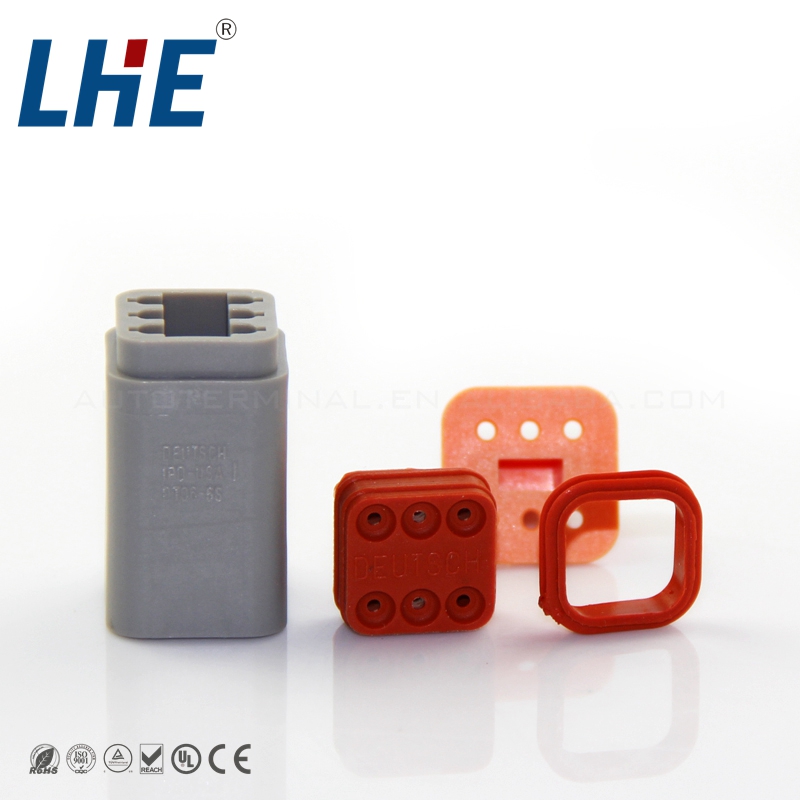
A: DT connector housings are manufactured from glass-filled polyamide (PA), providing mechanical strength and resistance to environmental stress.
Q What material is used for DT connector grommets?
A: DT connector grommets are made from silicone rubber, allowing flexible sealing around wires while maintaining resistance to temperature and moisture.
Q What material are DT connector wedgelocks made from?
A: Wedgelocks are produced from glass-filled PBT, offering rigidity and durability for reliable terminal retention.
Q What material is used for receptacle interface seals?
A: Receptacle interface seals are made from silicone rubber to maintain a consistent seal between mating connector halves.


