


How to Choose Long-Lasting Automotive Connectors?
An OEM team approved a connector for an engine bay harness and moved on. A year and a half into production, dealerships started seeing misfire codes on random vehicles. The cause came down to fretting corrosion at the terminal contact.
The connector had been tested on a bench at room temperature and passed. Nobody ran it through combined heat cycling and vibration. The recall cost ran into the millions. The connector itself was a forty cent part. This article walks through the selection steps and test methods that help you avoid that situation.
Why Connector Decisions Matter More Than You Think
A Late Change Affects Everything Downstream
A connector is not a standalone part you can swap out on a late revision without consequences. It connects the wiring harness to the ECU and lives in whatever physical environment the vehicle puts it through.
Swap the housing material from PBT to PA66 and the part absorbs twice as much moisture. That shifts the terminal retention numbers after humidity aging. Change the crimp tool at the harness supplier and the pull force spread moves.
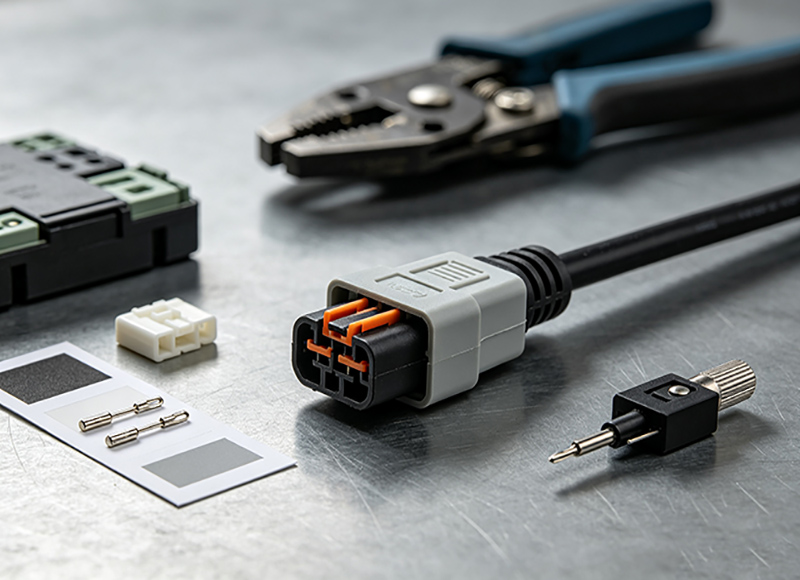
A last minute connector change can force new harness tooling, repeat validation runs, and production line reconfiguration. The connector decision you make at the prototype stage locks in cost, reliability, and serviceability for the whole platform run.
Start With the Application Requirements
Electrical Specs: Current, Voltage, and Signal Type
A low-power sensor operating at 12V requires a very different connector than a high-current power system used in electric or hybrid vehicles. Always choose a connector that matches the voltage, current, and operating conditions of your application.
Keep in mind that a connector’s current rating can change depending on the surrounding temperature. For example, a connector rated for 15A under normal conditions may safely carry less current when installed in high-temperature environments such as the engine compartment.
For communication systems, connector performance is just as important as power capacity. Networks such as CAN, LIN, and Automotive Ethernet rely on stable, high-quality signal transmission between electronic control units (ECUs). Using connectors designed for these applications helps reduce signal interference, improve communication reliability, and ensure consistent system performance.
Mechanical Specs: Vibration, Cycles, and Terminal Grip
Consider the mechanical conditions the connector will face. Connectors used under the hood are exposed to constant vibration from the engine, road movement, and nearby components. In these conditions, the connector must keep the terminal firmly seated and maintain stable electrical contact over time.
One important factor is terminal retention, how securely the terminal stays inside the connector housing. If the terminal is not held firmly enough, it may shift during harness assembly or gradually loosen during vehicle operation, leading to poor contact or electrical failure.
For added security, many automotive connectors use a secondary locking feature, often called Connector Position Assurance, to help keep terminals and connector halves properly engaged.
You should also consider how often the connector will be plugged and unplugged. A connector used during regular service needs a higher mating cycle rating, while a connector installed once inside the wiring harness may only need to support assembly and occasional rework.
How Harsh Environments Affect Connector Reliability
Heat Cycling and Temperature Swings
Temperature is another major factor in connector reliability. Connectors installed in the engine bay must withstand repeated changes between extreme cold and high operating temperatures. Areas close to the exhaust system, turbocharger, or other heat sources may experience even more severe conditions.
These temperature changes cause the plastic housing and metal terminals to expand and contract at different rates. Over time, this can affect how securely the terminal is held, reduce contact stability, and weaken the sealing performance of the connector.
Material selection is therefore critical. For moderate temperature areas, glass-filled PBT is often a cost-effective option. PA66 with glass fiber offers better heat resistance, but it may absorb more moisture. For the hottest locations near the turbocharger or exhaust system, high-performance materials such as PPA or PPS are commonly used to maintain durability and long-term reliability.
Water, Salt, and Chemical Exposure
Sealing performance is critical when connectors are exposed to dust, water, salt, or cleaning processes. Sealed connectors are usually marked with an IP rating, which indicates their level of protection against dust and water. For example, IP67 means the connector can resist temporary water immersion, while IP69K provides stronger protection against high-pressure, high-temperature water spray.
However, the rating only applies when the connector is properly assembled. Each cavity must be fitted with the correct wire seal or plug. If one opening is left unsealed, water and contaminants can enter the connector and cause failure.
Salt and moisture also affect terminal durability. In harsh environments, corrosion can damage the metal contact surface and reduce electrical performance. Tin-plated terminals are commonly used because they are cost-effective, but they may wear faster under vibration.
Gold-plated terminals offer better resistance to small movements and corrosion, making them suitable for more demanding signal or high-reliability applications.
The Test Standards You Need to Know
USCAR, LV214, and EIA-364 at a Glance
Automotive connectors are typically tested against several industry standards to confirm long-term reliability. These standards help manufacturers evaluate whether a connector can maintain stable performance under vibration, temperature changes, moisture, corrosion, and repeated use.
USCAR-2 focuses on performance requirements for automotive connector systems, including how securely terminals stay in place, how stable the electrical connection remains after aging, and how much force is needed to connect or disconnect the parts.
USCAR-21 provides the related test methods used to evaluate these requirements.
LV214, widely used by German automotive manufacturers, includes detailed testing for vibration, temperature cycling, and other demanding vehicle conditions.
EIA-364 is a broader connector testing standard used across the electronics industry. For automotive applications, it covers tests such as vibration, shock, durability, temperature changes, humidity, and salt spray exposure.
Vibration and Mate Cycling Validation
Vibration testing under EIA-364-28 subjects a mated connector to swept sine or random vibration while measuring contact resistance in real time. A resistance spike that lasts more than one microsecond during the test counts as a discontinuity. The spec sets a maximum number of allowed events.
Mate cycling under EIA-364-09 pushes the connector through repeated plug and unplug cycles, recording insertion and withdrawal force each cycle. Contact resistance gets checked before cycling, at intervals, and after the full rated count. If a connector rated for 50 cycles drops below minimum retention force at cycle 35, it fails.
From Harness Design to Production Validation
The Design Sequence
Harness design starts from the vehicle electrical architecture drawing. Every connector location is set by its position in the vehicle, the bundle route that reaches it, and how a technician accesses it for service. The designer picks the connector series based on pin count, current per circuit, sealing needs, and the physical space available at the mounting point.
Connector orientation gets set relative to the harness dress direction so the wires exit without side loading the crimps. The bill of materials covers the housing, terminals, wire seals, cavity plugs, backshells, and any mounting hardware.
Testing Before Tooling Release
First article harnesses go through full physical validation. Pull testing on every crimped terminal checks that the crimp meets the terminal maker’s spec. Cross section analysis on a sample confirms the conductor crimp fully compressed the copper strands into a solid bundle.
The finished harness runs through continuity, hipot dielectric withstand, and sometimes a full functional check in a vehicle representative test buck.
Environmental validation puts the harness through combined heat, humidity, and vibration cycles matching the vehicle platform durability plan. Connector contact resistance gets measured before, during, and after environmental exposure.
Conclusion
Choosing the right automotive connector is a decision that affects the entire wiring system. From current rating and signal stability to sealing, vibration resistance, material selection, and validation testing, every detail plays a role in long-term reliability. By evaluating these factors early, manufacturers can reduce rework, improve harness durability, and build safer, more dependable vehicle electrical systems.
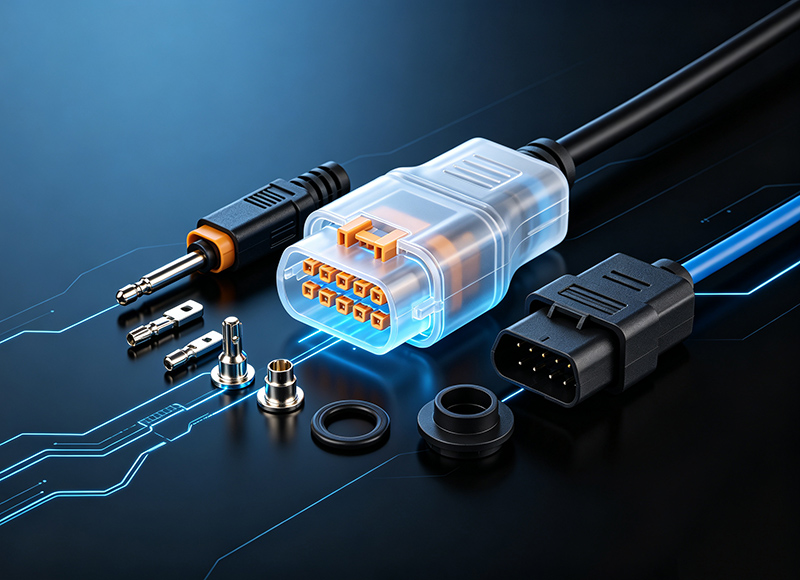
As an IATF16949-certified manufacturer, LHE provides automotive connectors, terminals, seals, cavity plugs, connector caps, and covers for automotive, e-mobility, broadband, and industrial applications. With experience in connector design, mold development, injection molding, terminal stamping, and quality control, LHE helps customers select reliable connection solutions for demanding applications.
--- END ---
Prev: Automotive Connectors, Terminals & Crimping: What Matters Most
Already the latest article
LATEST NEWS


